
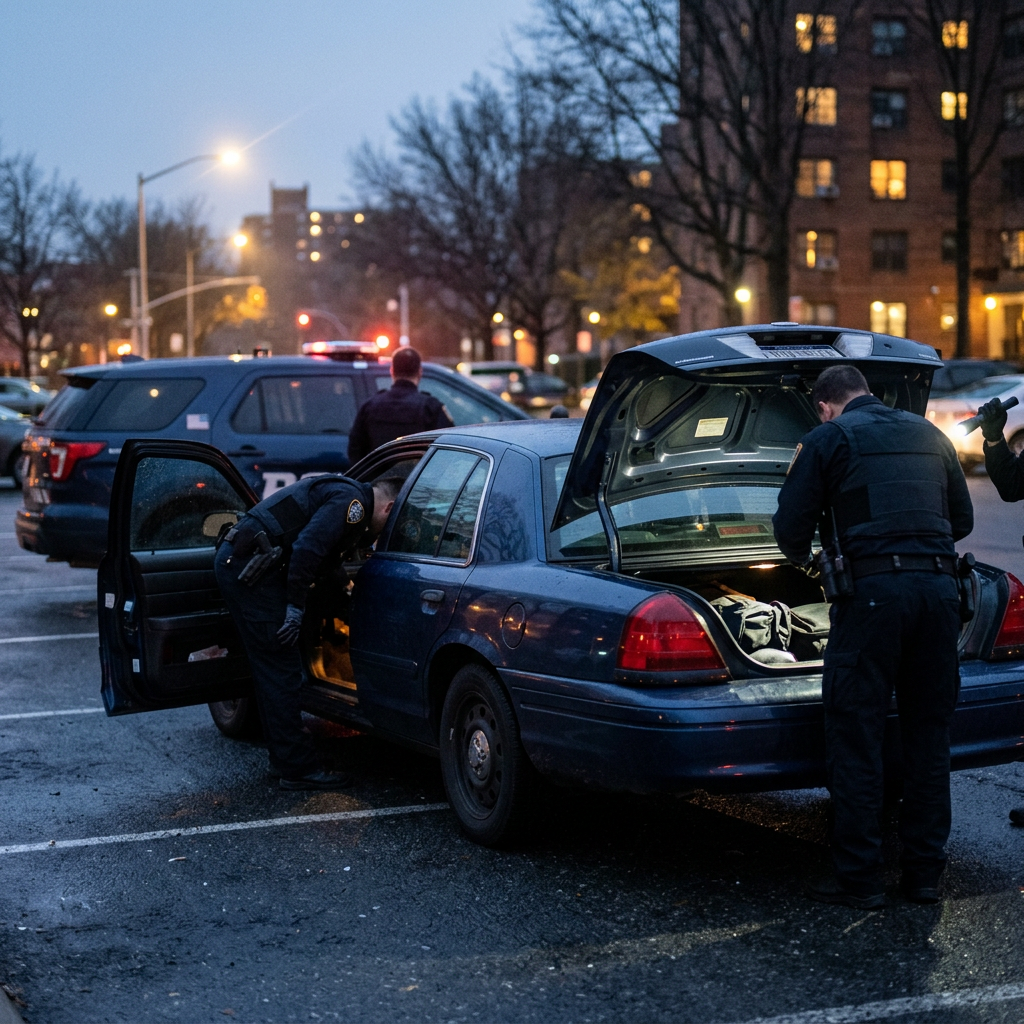
Many Massachusetts drivers wonder whether police can search their vehicle without a warrant. The answer is that, in certain situations, they can, but only when a specific legal exception applies. Police cannot search a car simply because they want to. A routine traffic stop for a civil infraction, such as speeding or a broken taillight, does not automatically allow officers to search your car.
Both the Fourth Amendment to the United States Constitution, and Article 14 of the Massachusetts Declaration of Rights, establish that if police search a person’s property without a warrant, that search is presumed to be unreasonable. Evidence gained from an unreasonable search can’t be used in court. However, like most rules in the law, the rule against warrantless searches has exceptions. Massachusetts recognizes the “automobile exception” to warrantless searches. Since a car does not stay in one place, a judge will not require the police to run back to the station and get a warrant every time a car contains evidence of a crime.
To search a vehicle, officers have to have probable cause to believe that the vehicle contains either “contraband” (i.e., inherently illegal items such as drugs), or other evidence of a crime. Probable cause requires specific facts that would lead a reasonable person to believe evidence of a crime is inside the vehicle. If an officer sees illegal items or evidence in plain view, those observations may create probable cause for a search or seizure. However, if all the officer has is a guess, or a hunch, that will not create probable cause.
Of course, the police may search a vehicle without a warrant if the driver voluntarily consents. Drivers have the right to refuse a request to search their car. If you are worried about the consequences of a vehicle search, or if you are just in a hurry to get where you are going, you don’t have to agree to the search. However, if the police have probable cause to search your car regardless, then they will be able to search even without your consent. Whatever you do, don’t argue with the police or give them a hard time. That will only make them look harder for a reason to search the car.
If police arrest a driver, the circumstances of the arrest may allow a search of the vehicle. For example, the police pull a car over for a traffic violation. They find out the driver has a warrant for his arrest. After arresting the driver, they search him and find a substantial amount of drugs. That might also give the police a basis to search the car for drugs.
If police arrest a driver, and there is no passenger who can legally drive the car away, the police will have the vehicle towed. If a vehicle is lawfully towed and impounded, the police may conduct an inventory search to document the vehicle’s contents. Note that taking inventory of what is in a car is NOT the same as searching the car for evidence of a crime. The police can’t escalate an inventory search into an investigation, just because the vehicle is getting towed.
Here in Massachusetts, understanding your rights during a traffic stop can help you make informed decisions. While police may conduct warrantless searches in limited situations, they must follow specific legal requirements before searching your vehicle. If you have any questions, please contact me at attypetercole@gmail.com or 617-935-7657.